29 June 2012

48 Years Later ...

In early June of 1964, despite flooding from heavy May rains and a heavy snow melt from the Rockies that had burst dams, carried off bridges and chunks of the paved highway and other roads in the north-central part of my birth state of Montana, my intrepid father drove me in the family car to the "Big City," aka Great Falls, where I would board an airplane for the first time in my life. This journey would take me to a truly large city, Philadelphia, PA.  There I would meet with several other groups of prospective Peace Corps Volunteers to be physically and mentally assessed beyond our initial qualifying physical and mental assessments and have our teeth and eyes checked. Providing that no previously indiscernible disqualifying tendency had emerged in the meantime, I would join the Morocco III group. Together, we would go on to Princeton University for a couple months of training in languages, pedagogical methods, Middle Eastern and North African cultural studies, contemporary American issues and a bunch of miscellaneous other skills deemed necessary for our survival in North Africa for the next two years.

There were generally two routes to get us to Great Falls. One was the highway, which had not suffered the flooding with grace, and was also the longer route - 120 miles. The other was a gravel road, which had the advantage of being shorter (90 miles) and from all accounts, was less damaged. According to local lore, it had once served as a bootlegging route dating from the days of Prohibition. We took the bootlegger route that day and had little trouble. But in many respects, there has been a lot of water under a lot of bridges since that day in 1964.

Morocco III turned out to be an exceptionally close-knit group - and so most of us have remained these many, many years later, in large part due to the driving force of one member, our beloved "J-J," aka "Jean-Jacques." This is not at all his real name, of course, but he chose it "back in the day" and it is how we all remember him best.

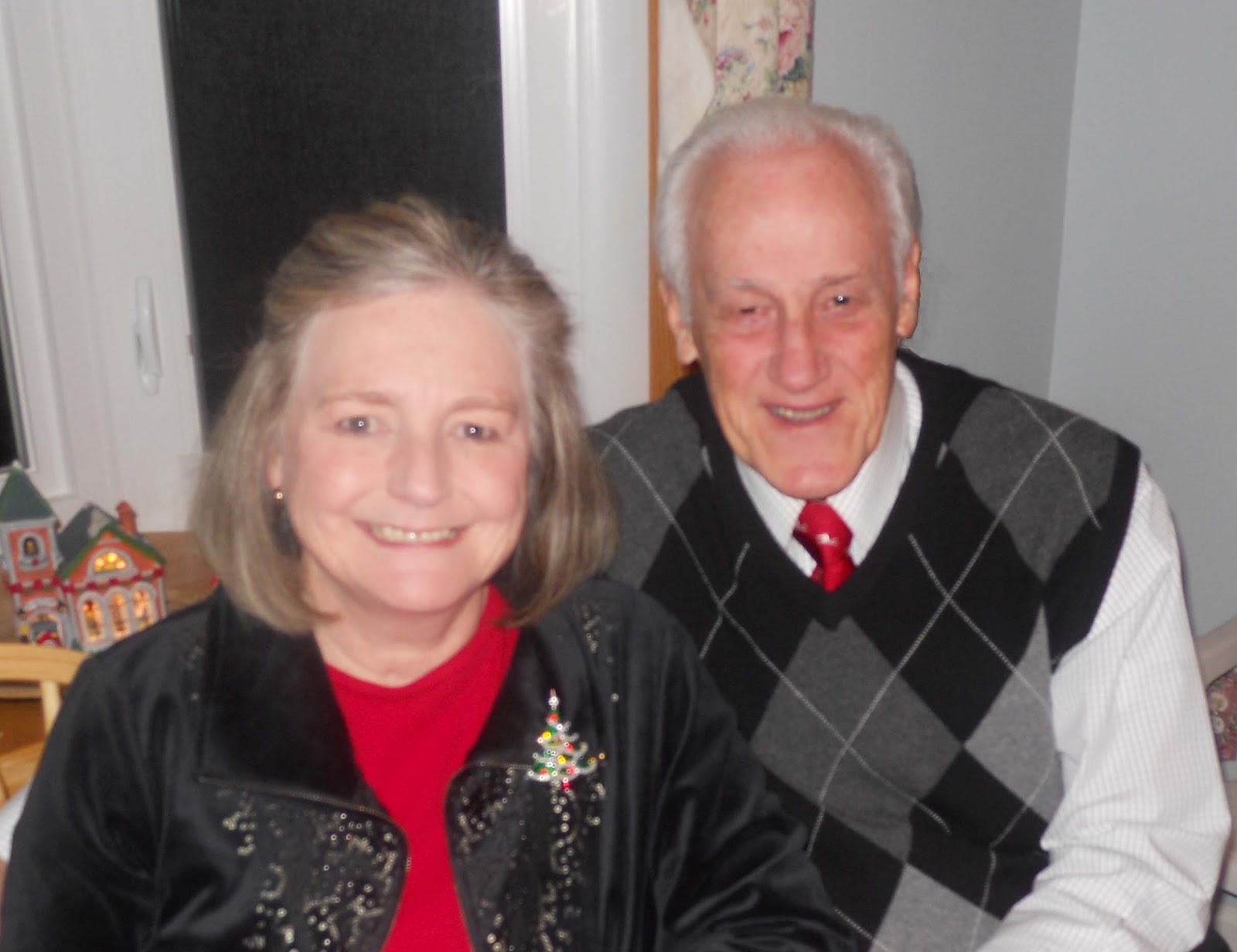
Since 2004, J-J has tirelessly worked with other members of the group to organize Morocco III reunions every four years, with the location generally being determined by the hosts. Thus we have met in Saint-Paul, MN, in Sacramento, CA and this year, in beautiful Martha's Vineyard. Today, I received some photos from the reunion, which I was unfortunately unable to attend.
We are not an "exclusive" group. If other returned Morocco PCVs happen to be in the area, occasionally they also show up and are welcome. Generally we like to do whatever is most done, thus some attendees tried their hand at fishing, reminiscent of the fishing some did on the North African side of The Pond.
But the real draw this year was something that the New England coast is well-known for: lobster with roasted ears of corn!
Everyone clearly had a wonderful time! 

28 June 2012

Affordable Health Care

It is with some relief that I have read that the Supreme Court of the United States (aka "SCOTUS") today upheld the constitutionality of the Affordable Care Act ("ACA"), referred to sneeringly and nastily as "Obamacare" by too many in the US Republican Party whose parents apparently never taught them civilized manners.

Of course, partisan politics in the US, coupled with corporate media bias against anything that might actually make President Obama look good, and fact-checking all being what they are, several of the major news organizations immediately broadcast to the world that SCOTUS had declared the ACA "unconstitutional." Many of us are old enough to remember - if just barely - the last time that US media got the facts so wrong, when newspapers announced that "Dewey Beats Truman" in November 1948.  Of course, it was just the opposite.  Truman won that election.  In 1948, the news services had more of an excuse. It actually took a while to count the votes in those days. Because of the faux pas of today's contemporary media, late-night comedians will have fodder for their jokes stretching into weeks. Some are already referring to this media fiasco as President Obama's "Truman moment."

Much as I may be dissatisfied with the ACA's provisions for not being a national health service like the majority of effective health systems in the world - including the developing world - its provisions have enabled many of my fellow citizens to purchase health insurance coverage, some for the first time in their lives. Under the ACA, the insurance companies that make a business out of what should be a human right can no longer deny coverage to individuals who suffer from the often vague disqualifier known as a "pre-existing condition."   This so-called "pre-existing condition" was all too often a moving target in its identification, serving more the financial interests of the insurance companies than the legitimate health interests of us all.

Interestingly, here in Switzerland, the Swiss system is not national health care as it is in France. It is more like the US system in that we must all purchase private insurance. The difference here however is that the companies are regulated and controlled by the State. The costs are eminently reasonable. And even politicians of the right-wing here are absolutely scandalized at the thought that anyone should ever have to go bankrupt because of health care costs.

It's about time that something reasonable was decided by this SCOTUS. I am still rankling - as are many of my fellow citizens - that the majority have apparently decided that corporations are people (!!) and, along those lines, just two days ago struck down a 1912 law in my birth state of Montana that was intended to address outside corporate interference in state and local elections. So I was astonished when Chief Justice Roberts, who has slavishly followed the lead of the most radical judicial activists against the interests of the American people, actually voted with the so-called "liberal" justices in upholding the constitutionality of the ACA.

That took a lot of courage in today's very nasty political climate. And I will acknowledge courage when I see it.

27 June 2012

The Way We Were ... And Are

On 27 June 1981, HWMBO and I first "tied the knot." We had met each other a mere six months earlier, so yes, it was a whirlwind romance. At the time, we were both working in Morocco, I as a USAID contractor, he with his company's commercial contract with the Moroccan Government. Both of us were single parents; in fact, our sons were in school together and they knew each other before we even knew "of" each other, let alone had met. We were a LOT younger then than we are now, but neither of us was a twenty-something, even then. Our hair had a lot more color in those days. In my case especially, there was also less poundage. Sigh! If only ...
Fast forward 31 years to today. Yes, it's been that long. The husband of one of my French neighbors insists that we should only be able to count half of each of these more recent years because HWMBO and I are physically apart so much. But we still count each milestone as a full year nonetheless.
We'll be together again soon. Even though it's never quite soon enough.  

26 June 2012

My Transplanted Provence

One of my favorite places to visit is the beautiful southern area of France known as Provence, with its blue sky, vivid bright colors, fragrant flowering plants, medieval villages perched on hillsides, olive groves, vineyards, Alpine foothills and, of course, the Mediterranean beaches near Cassis, Saint-Tropez, Cannes, Nice and further along the French Riviera into Italy. For a quick overview, see this short video.
The coast of Provence has some of the earliest known sites of human habitation in Europe. Primitive stone tools found there date back to 1.05 million years BC. This is patent evidence that even some of my earliest ancestors found the area conducive to settling down, finding food, building homes - although the earliest were cave dwellings - and raising families. Eons after these cave dwellers, the first pastoral peoples came, bringing flocks, agriculture and even industry. There is evidence that the first pottery production in France began in Provence, around 6000 BC. Various new peoples discovered the area, displacing or blending in with the earliest settlers until finally the two main groups were Celts and Ligurians.  Then the Ancient Greeks discovered the area and created their first permanent settlement at Massilia (modern Marseille), making it one of the major trading ports of the ancient world.
But where the Greeks would settle, the Romans would not be far behind. Ultimately the Romans would conquer the whole of Gaul, later to become France. When I first studied Latin, I well remember working my way rather tediously through selected parts of the Commentarii de Bello Gallico written by Julius Caesar about his experiences in the Gallic War, as well as his frequent references to "Provincia" (now Provence). Since Caesar's days, many peoples have come and gone in the area: some willingly, some not. The last warlike invasions occurred there on 15 August 1944 when the Free French, accompanied by other Allied troops, had to reconquer their own country. Nowadays, invaders come from all over the world, armed principally with their pocketbooks and credit cards, to enjoy "la belle vie" as it is thoroughly enjoyed there.


The last time I visited Provence was in 2009 when Healer Sis was visiting. While we certainly enjoyed traveling and seeing the beautiful sights, upon our return to Switzerland we realized that we already had a lot of the ambiance of Provence right here, but without the crowds. Vineyards and mountains are here in abundance. I have a lovely little beachfront right on Lake Geneva. Best of all, it's only a five-minute walk from here. As for other typical sights of Provence, such as lavender
and brilliant scarlet poppies,
I can see them every day as I ride my bicycle.
In fact, all I have to do is look out on my balcony
and I have my transplanted Provence right before my eyes!

24 June 2012

The Undefeated

From 19-23 June this year, Royal Ascot, one of the world's oldest and most prestigious race meets was held at Ascot Racecourse in the UK. Ascot Racecourse dates back to 1711, when it was founded by Queen Anne. Fittingly, its inaugural race was Her Majesty's Plate, for a prize of 100 guineas. The early version of that race was open to any horse, mare or gelding over six years of age and consisted of three heats, each of which was four miles long. Today, races at Ascot have been mightily shortened from those early ordeals. Here is an interactive timeline with historical highlights of the past 300 years. 


Royal Ascot is considered the "pinnacle" of the racing calendar at Ascot. During her 60 years as the UK's reigning monarch, Queen Elizabeth II has never failed to attend the meet, arriving each day in a horse-drawn carriage, often with other members of the Royal Family in attendance. A timelapse of the procession can be seen here. Once the Royal Procession has passed before the stands and the Royals have been comfortably settled in their sky box, the day's activities are officially launched.


Press coverage is often focused more on those who attend and how they are dressed, as if the meet were a fashion show, and attendees are only too happy to conform to the rigorous dress code. Those who remember the film, My Fair Lady, will no doubt remember the Ascot Racecourse scenes. A memory jog can be found here. And yes, the men do still wear top hats and tails. Other than dress length modifications, the women's coordinating dresses and hats are still very much de rigueur and l'ordre du jour. That 19th century Ascot crowd would feel quite at home at Ascot today - insofar as style is concerned.


But the real stars of the show, IMO, are the horses and their respective entourages, including owners, trainers, jockeys, grooms, stablepersons, etc. There were many gallant horses who ran, not all of them winners. As usual, there were many associated human interest stories. But over the course of the five-day meet, there were two standout horses: Frankel and Black Caviar.


Frankel is a British thoroughbred colt, undefeated in ten starts prior to the Ascot meet, who has been the highest-rated racehorse in the world since May 2011. At Ascot, he extended his winning streak to 11, adding a convincing victory in the Queen Anne Stakes, as shown here. Once Frankel turned on the speed, there was no question as to the outcome. Wow!


Black Caviar, on the other hand, is an Australian thoroughbred mare, rated as one of the top racehorses in the world. She had 21 wins to her record before making the 10,000+ mile journey to Ascot to race outside her native Australia for the first time. Her target was the Diamond Jubilee Stakes. Her fans in Melbourne, Australia were clustered around a large TV screen after midnight their time, hoping to see her add a 22nd victory to her record in real time.


Well, for a few heart-stopping moments, no one was sure exactly what had happened. She was in the lead until the last couple seconds when two French horses rushed up and it looked as if one of them might have just beaten her. It also seemed as if her jockey had misunderstood where the finish line was and had started to relax instead of continuing to urge her on. Thankfully for her fans worldwide, Black Caviar had just managed to keep her head in front, as shown here.   


For Black Caviar, however, being undefeated throughout her career has had a price. The latest word is that she apparently suffered two muscle tears and bruising to her hindquarters - exactly when and how are not clear. That she was still able to run - and win - in the circumstances is very impressive. Best of all, it appears that her racing career is not over yet, although she will have a good, long, and well-deserved rest before she races again.  

23 June 2012

Rail Travel - Swiss Style

In these retirement years when for the most part, I don't have tight schedules to follow, I am able to enjoy observing the world. Thus, instead of routinely driving to Geneva, Lausanne or other points within Switzerland when visiting friends, I generally try to take the train. I find that I actually have time to view the countryside this way, rather than having to keep my attention on road conditions, signals and other drivers. Railroad stations here are centrally-located, so one arrives right in the middle of town, even in the tiny ones.
So long as one's visit is short, a one-way ticket can actually be used for traveling within one's destination city as well as for the return journey. For example, if I want to go to Geneva or nearby Nyon, but the whole visit will not last longer than two hours, one-way ticket purchase will suffice and will include the local buses and trams. A one-way ticket to Lausanne allows me a "grace period" of four hours, which is plenty of time for short visits to friends and the return trip. For longer periods of time, it's better to buy a day pass, which is still generally less expensive than two one-way passages.

The Swiss Railway (SBB/CFF) has a website that provides excellent information, including timetables and rail fares, in four languages: French, German, Italian and English. It was formerly a national institution, but since 1999 has been a special corporation whose stock shares are held by the cantons. Those of us who are residents generally purchase demi-abonnements (half-fare travel passes, locally referred to as the "demi-abo") for periods from one to three years. These entitle us to travel anywhere, anytime within the country for half-price, even if we merely purchase our train tickets at a ticket machine a few minutes before the train leaves.  If one books longer trips enough in advance, one may also find that special fares are available for which a demi-abo is not even needed. But these fares quickly sell off, especially during peak travel periods.
When arranging for train travel to Italy last year, for example, I was able to get special fares both for the trip to Milano and for the return to Geneva that were even less than the demi-abo fares would have been. Because HWMBO, who does not have a demi-abo, would be accompanying me on the return trip, I used the special fare for his ticket from Milano and purchased a half-fare ticket for myself. No, I was not pulling a fast one. I was merely following the suggestion of the very helpful ticket agent. Note: the smaller stations use only machines, but those situated in cities like Geneva and Lausanne have ticket offices, including associated travel agencies that will book hotels, etc. as well. These are the best places to get information from actual human beings, all of whom are multilingual (in case of linguistically-challenged travelers).


On Wednesday, I traveled to Lausanne to visit friends and was delighted to catch one of the sleek new double-decker trains. Here is "my" train, just after arrival in Lausanne.
Here is the railway car (wagon) that I rode in. And yes, I chose a seat on the upper level. What fun!
The large "2" indicates that this car is for second-class passengers, which is what most passengers - including me - choose to pay for. But there was nothing "second-class" about this car, believe me! 
    

22 June 2012

Midsummer

I find that my spirits begin to lift around 20-23 December each year, dependent on when the winter solstice actually falls and the days begin to grow longer. Similarly, my spirits acknowledge the high point of the year with elation, that day when we have the most daylight hours. The summer solstice falls around 20-22 June. Inexorably, it occurred again this year, on 20 June. Now begins the shortening of the daylight hours, gently at first, then quickening after the autumn solstice until we rush headlong into days of darkness once again. My mood ever so gradually reflects this.
The waning of daylight affects our circadian rhythms, those fascinating processes intrinsic to us that are controlled by light and dark. They let us know when to sleep, when to wake, when to be active and when to rest. Light is literally a life-bringer; dark can be a life restorer. Light and Dark have their designated places in our life cycles. So long as each is kept in balance, they can help us to retain our own centers and our wholeness. Seriously imbalanced, they can cause physiological or psychological illness, even to trauma and paranoia. There is good reason why continuing periods of bright light are used by torturers, for example. We thought that such things were of the past, certainly not used by "civilized" societies.

We were wrong.

To our ancestors, whole rites and rituals developed around these special periods of the year. My own ancestors, Celts for the most part, used to celebrate by dancing around bonfires to help increase the Sun's energy. Druids (Celtic priests) used to celebrate the day as the "wedding of heaven and earth," giving rise to the tradition of June brides because June was considered to be a lucky month.

Of course, this is mostly latter-day reconstruction of events. When there were Druid priests, there was no June as we know it. Just how did those priests know when Midsummer occurred? Or Midwinter, for that matter? There were no calendars then, at least none that we have found. Did they base their calculations on the Sun, or the Moon? After all, the Lunar Year is significantly shorter than the Solar Year. Perhaps this moveable feast varied by significantly more than a few days each year, at least until the Julian calendar imposed dates and months.


For me, Midsummer is always a time for musing, for the beginnings of a sadness that once again, another year has climbed to its midpoint. Many I knew and loved who began 2012 as HWMBO and I did have not even lasted to this point. And we are ourselves growing grayer as we begin the descent.