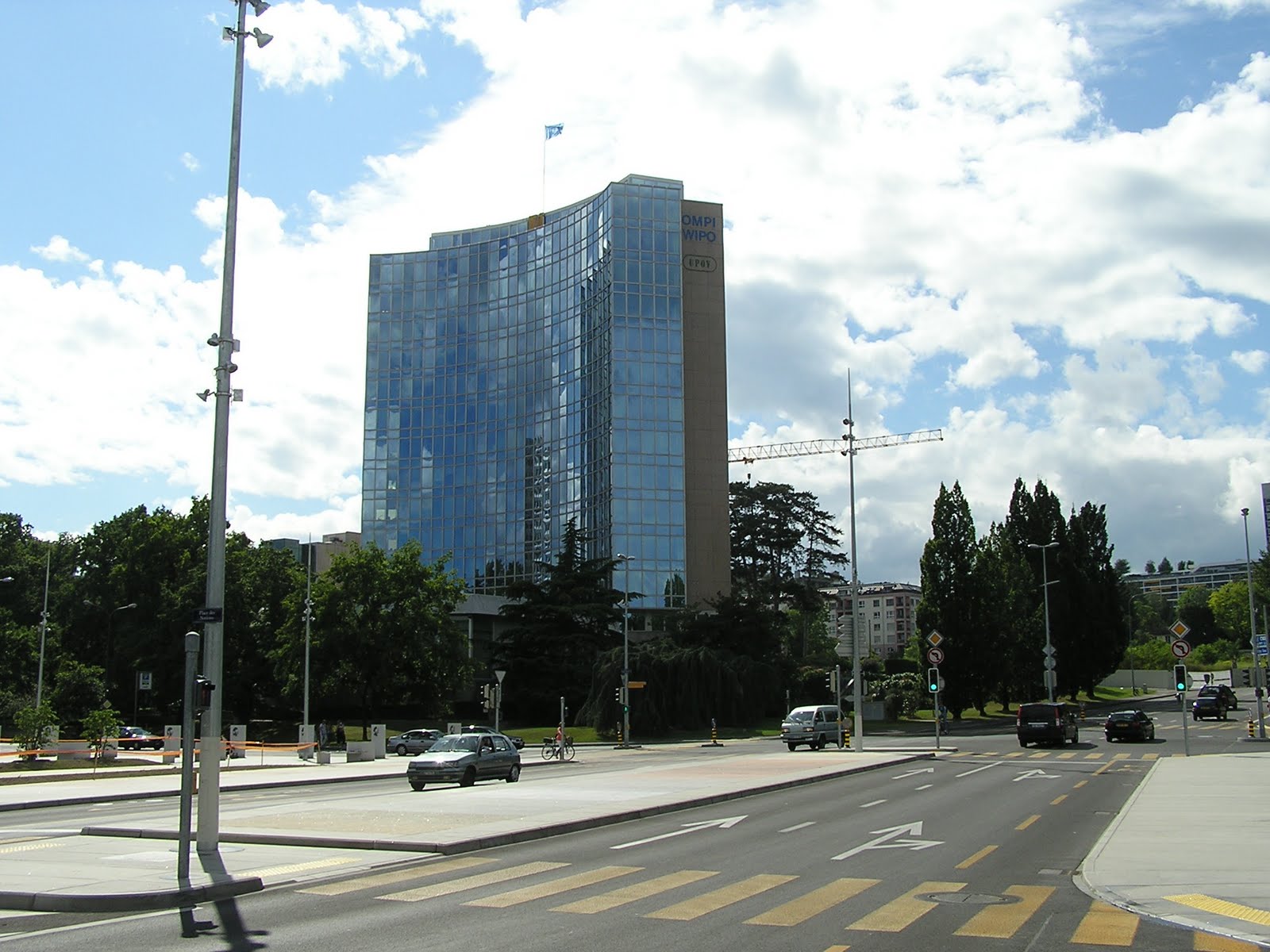
On 5-6 June, there were even more crowds than usual at the Place des Nations in Geneva. In order to celebrate World Environment Day, gates were opened wide for entrance into the Ariana Park at the Palais des Nations, also known as the European headquarters of the United Nations. This area has for many years been closed to the general public, thanks in good part to the disastrous foreign policy practiced by the previous US Presidential administration, which did not make the world any safer for humans - or for the environment - at all.
Ariana Park is described as "an award-winning example of biodiversity in landscape management." The 46-hectare park was bequeathed to the City of Geneva in 1890 by Gustave de Revilliod de la Rive, with three conditions: first that the park always remain accessible to the public; that he be buried in the park; and that peacocks roam freely on its grounds, although this last condition is in dispute. The City of Geneva granted the site to the League of Nations and later to the United Nations. Peacocks do still roam there today, but it is a rare tour group that catches a glimpse of them because the official visitors' tours of the UN buildings and grounds have been scaled back a lot from when I first arrived in Geneva in 1994.
At the same time, the World Intellectual Property Organization (WIPO) also opened access to its observation deck from which one of the most spectacular views of Geneva can be had. Facilities at the Regional Office of the UN Environment Programme (UNEP) and the International Peace Bureau (IPB) were also open to the public in order to celebrate both the environment and the centennial of the Nobel Peace Prize received by the IPB.
Geneva's international community comprises some 200 ambassadors serving at national missions to the United Nations and international organizations, 30 international organizations, 300 non-governmental organizations, some 35,000 jobs and contributes about CHF five billion annually to the gross national product of Geneva canton. But international Geneva is more than these structures or individuals or their economic contribution to the Swiss economy. It is a crucible in which the rules of social, commercial, sanitary, humanitarian, climate-related, technical and military governance are elaborated. It is literally at the heart of multilateral diplomacy - one of the two or three world centers of "soft power."
I believe that is the principal reason why I not only enjoy living here but have done my best to stay here as long as possible. In a world where military might, weapons and bad behavior are rampant, all too often trample roughshod over human rights and dignity and, by so doing, harm us all as well as the world we live in, it helps me to realize that there are indeed many who not only wear "white hats" but who continue with all the power at their disposal to help and encourage those who have been trampled upon. That our progress is all too often one step forward and two steps back is not the point. The point is that we continue, in spite of all, to speak out for the alternatives. After all, someone must.
Sagittarius (22 November - 21 December) is a fire sign ruled by the planet Jupiter and represented by a Centaur wielding a bow and arrow. Sagittarians tend to have dreams that are very dear to their hearts and are the bases for their motivations. Their freedom to dream is essential to their well-being. Among many other things, they love children, animals and travel.
07 June 2010
06 June 2010
The Sport of Kings ... and others
Among the classic horse races held this weekend, the Belmont Stakes, the third race in the US Triple Crown for three-year old Thoroughbreds, was run at Belmont Park, NY yesterday. Because neither the winner of the Kentucky Derby nor the winner of the Preakness was in the Belmont, the usual hyperbolic media frenzy was largely absent in the days leading up to the race. As it turned out, the major drama in the race occurred when a horse named "Drosselmeyer" zipped by another horse, unfortunately named "First Dude" - apparently after the infamous husband of the erstwhile US Republican Vice-Presidential candidate - to cross the finish line first. Good for Drosselmeyer! Given the demonstrated US MSM tendency to give tons of press to the least deserving of personalities, a win for "First Dude" would have forced the barely half-term governor's presence on us all even more than ever. Thank God that bullet was dodged!
Meanwhile, on the European side of The Pond, there was quite a spectacular win at the Epsom Derby yesterday, with lightly-raced "Workforce" distancimg himself from the field and setting a new course record in his win. Veterans of the Derby remarked that the race reminded them most of the spectacular race run in 1981 by the ill-fated champion "Shergar." It was the fifth Derby win for trainer Sir Michael Stoute. I find it interesting that the Brits actually knight some of their sports heroes. And Derby Day at Epsom, with men dressed in top hats and tails, along with women in frilly dresses and splendid hats, is quite fun to watch. It was made famous in the musical "My Fair Lady." The Derby was also a victory for three-time champion jockey, Ryan Moore - his second of the day, in fact. Moore at 26 has already amassed an amazingly impressive array of racing records and trophies and is well on his way to making racing history in the UK.
Yesterday, a young Italian woman won her country's first French Open Women's Singles title. By the final, most of the top-seeded women had been eliminated, but that should take nothing away from Francesca Schiavone's win. Today, it was less of a surprise that Rafal Nadal, who met erstwhile giant-slayer Robin Soderling in the French Open final, romped away with the Men's Singles title for the fifth time. In doing so, he not only got his own back from Soderling for last year's defeat earlier in the tourney but also recaptured the No. 1 ranking that he forfeited to Roger Federer last season. Clay is Nadal's best surface. It will be interesting to see what happens during the rest of the tennis season. But if Federer wants to reclaim his No. 1 rank, he'll need more fire in his belly than he's demonstrated so far in 2010. Not that Federer needs to prove anything. At all.
Attention here now is turning towards the upcoming World Cup playoffs to be held for the first time ever in the Republic of South Africa. I received a flyer in my mailbox yesterday advertising that all matches will be retransmitted outdoors on a giant screen set up in nearby Nyon. Entrance is free. There are many other similar opportunities in the area. Because some of the visitors who will be arriving soon are major soccer (aka football everywhere in the world except in the US) fans, they may be interested in checking these out for the ambiance, if nothing else. We will, of course, also be able to view the games on TV at home.
05 June 2010
June weekends
Now THIS is more like it! There's still some haze so that the Alps are not at optimum visibility, but today, the sun was out in full force.
This little one had just finished feeding the ducks by the boat landing.
On the first Saturday of each month, my village holds a local flea market.
This month, there were actually customers to browse among a variety of wares on display.
There were dolls and furniture ...
and some interesting possibilities for wall hangings ...
together with tables set up under the arcades, such as these outside the butcher shop, accompanied by the aroma of roasting chickens.
It was a splendid beginning to what looks to be a splendid weekend. At long, long last ...
04 June 2010
Gallimaufry 5
Theater in English
Tonight I'm meeting some friends in Geneva and we'll attend an English-language play. In part due to the numerous English speakers in the area of Geneva and western Vaud, in particular, there are at least two excellent amateur theater (or "theatre" as is more often used here) groups that present drama and musical fare in English to very appreciative audiences. While we're now coming to the end of the 2009-2010 season, auditions will soon be scheduled for future productions.
The website that provides fairly comprehensive information about these events is the Theatre in English, which presents an overview of the current season's offerings, as well as a monthy calendar which also announces professional productions, such as one this month, a performance of "Othello" at the castle of Prangins 17-19 June by Howard Productions. The Theatre in English site also contains links to the two amateur groups: the Geneva English Drama Society (GEDS) and the Geneva Amateur Operatic Society (GAOS).
Tonight my friends and I will be attending a performance of Enid Bagnold's "The Chalk Garden." Given the generally high quality of these productions, it should be great fun.
Stemming the flow
Recent reports state that, while British Petroleum has succeeded in lowering a "top cap" over a severed pipe over the massive human-caused catastrophe that is somewhat disingenuously referred to as an "oil spill" in the Gulf of Mexico, the "top cap" is apparently not tight enough to contain the gushing oil. It had been hoped that this technique would contain up to 90 percent of the so-called "spill" and that the "captured" oil could be siphoned to tankers on the surface. So far, that is not the case, at least not yet. I am certain that I am not alone in hoping as fervently as possible that efforts to contain the oil will succeed, and as soon as possible. Not only have human error, negligence, selfishness and perhaps even criminal actions and omissions been responsible for creating this disaster, it is long, long past time that alternative energy sources be seriously committed to and developed. Anyone who has been on the moon or asleep for the past month can see for themselves what has been happening by consulting the BP live webcams - or by consulting numerous YouTube videos that have been posted.
Blockades, armed attacks, piracy and diplomatic disasters
In the Mediterranean, the Israeli-Palestinian debacle lurches from bad to worse with each passing hour due to intransigeant zealots on all sides of the equation. It is enough to wish a pox on all religions. Still, it has been inarguably and repeatedly demonstrated that one side is better organized, funded and supplied with deadly weapons than the other, with a lot of that funding and deadly weaponry coming from my own country. That is the part that most outrages me literally beyond reason. In any event, this week's badly conceived and even worse implemented Israeli assault on ships bound for Gaza to bring humanitarian supplies to the Gaza ghetto - and that is the kindest description of the situation - has not helped the Israeli situation one whit. If anything, Israel has probably irreparably lost Turkey, its longest and staunchest Middle Eastern ally. The visible reactions in Turkey are only the tip of the iceberg. Events are not being given much balanced attention in US media so far as I can see. To the contrary, apologists for Israeli actions have flocked to the airwaves there in an effort to convince that pipes, sticks and knives (knives have innocuous purposes, after all) are literally akin to tear gas, deadly force and semi-automatic weapons and that the dead victims were at fault for being there in the first place. But away from the US MSM, the real stories are being played out - and they're not at all pretty. A Swede, Henning Mankell, who was not on the Turkish ship where people were killed, reported:
"They got very aggressive and ordered us to come down. There was one older man who was a little slow, so the Israelis attacked him with an electric stun gun. He was in a lot of pain. So was another passenger who was covered in paint after being hit with a paint ball missile." He also recounted that the commandos searched the ship thoroughly and emerged waving a razor and a metal-box cutting tool, which they claimed were "weapons" intended to be used against them. All the passengers were then herded into a group, with armed guards standing watch as the ship was taken to Israel. "When we got off ... we were made to walk down a corridor of armed commandos who filmed all of us with cameras. They stole my mobile phone, my money, my clothes and my credit cards." Mr Mankell said. He was held in a cell for 24 hours along with an MP from Sweden's Green Party, and then deported "without his socks."
It is interesting and very ironic that efforts to draw attention to the inexcusable plight of Gazans can be likened to the Berlin Airlift. We did the right thing then. And so, in the end, did the Soviet Union, when it lifted the blockade.
02 June 2010
Roland Garros 2010
Whoever wins the men's singles at the French Open this year, it will not be Roger Federer. The phenomenal Swiss tennis player lost a four-set match to Robin Soderling of Sweden in this year's quarterfinals yesterday. It was vengeance of a sort for Soderling, who was defeated in the 2009 final by Federer, when Roger won his first and only French Open title.
Federer took the first set easily and was up 5-4 in the second set when a 45-minute rain delay apparently stole his thunder. When play resumed, everything went Soderling's way for the next three sets. Federer had his chances, including a set point just before the rain delay, but Soderling, who also managed to knock Rafal Nadal out of the tournament in 2009, was clearly the better player for the match. Now Soderling will face Tomas Berdych of Czech Republic in the semifinals. Nadal, who won his match today, will meet Austrian Jürgen Melzer in the semis. It could be that Soderling and Nadal will meet in Sunday's final. If nothing else, Soderling has made tennis history by winning against both Federer and Nadal in the same Grand Slam tournament, even if not during the same year.
Switzerland, of course, adulates "le Grand Rodgeur" as well it should. He is a truly phenomenal champion, no matter what happens from now on. But, as a nation, Switzerland was probably most excited by last Sunday's match, when Federer played his fellow countryman and occasional doubles partner, Stanislas Wawrinka. (Together, they won the Gold for Switzerland in men's doubles at the Beijing Olympics in 2008.) As expected, Federer won Sunday's match. But Stan is a favorite where I live, in part because he comes from the canton of Vaud. Many were pulling for him. He is also a really nice guy. He wins more brownie points locally than Federer does because Wawrinka almost always participates in the Swiss Davis Cup matches whereas Federer more often than not does not.
HWMBO and I attended the first weekend of play for the 1997 French Open and had a ball. That year, Gustavo Kuerten of Brazil was the winner. Kuerten went on to win the championship two more times. The matches we watched were fun because, at the time, we had no idea who would end up in the finals, or even the quarterfinals, and were simply able to enjoy ourselves cheering for whomever we wanted to. As always, it was a pleasure to visit the City of Light. We will long remember the atmosphere of actually being there although we must admit that we actually see the players and the games better watching our TV set at home.
Music makes the world go round
Last week through Saturday night was Eurovision Song Week. Saturday night was the finale. German singer Lena won the 2010 Eurovision Song Contest, hosted this year in Oslo, Norway, for her country. Under contest rules, Germany will host the 2011 Eurovision Song Contest. Her winning song, "Satellite," was written by American songwriter Julie Frost and Danish songwriter John Gordon, so international collaboration was clearly a feature of the contest. Lena's first album, "My Cassette Player," was released in May and debuted at number one among German albums.
Following Germany, the top-ranked country finishers this year were Turkey, Romania, Denmark and Azerbaijan. That's quite a group.
The Eurovision Song Contest, open to all active member countries of the European Broadcasting Union (EBU), has been held annually since 1956. The first contest was hosted in Lugano, Switzerland. Full active members are broadcasters based in countries from Iceland to Russia and include most European countries. Associate members include countries from around the world. Associate members from the USA include the major non-cable broadcast networks, the Corporation for Public Broadcasting and Time Warner, among others. The Contest has been broadcast each year since 1956, is one of the longest-running television programmes in the world, and is also one of the most-watched non-sporting events in the world. Audience figures have been quoted in recent years as anything between 100 million and 600 million international viewers. Since 2000, the Contest has also been broadcast on the Internet.
Probably the most famous Eurovision Song winning group whose career was directly launched into the spotlight following their win was ABBA. They won the Contest for Sweden in 1974 with their song "Waterloo" and went on to become one of the most successful bands of all time. Their music has also been featured in the long-running musical, "Mamma Mia!" and the film of the same name. Another notable winner was Céline Dion, who won the Contest for Switzerland in 1988.
The Eurovision Song Contest was originally started as a way to bring then war-torn Europe together by means of light entertainment. It has been remarkably successful in doing that throughout its history, although it has been no stranger to controversy on occasion.
I read all too often in the news headlines about the horrific events that occur when people do not practice the basic principle of treating others in the way that they themselves wish to be treated. I wish that there could be a Worldvision Song Contest - to bring ALL of us together - and to remind us all that we are human beings who share a common destiny and the globe - regardless of our differences.
Music is one language common to us all. It speaks to our hearts and moves us. I wish that it could move us all to peace and prosperity. Oh, how I wish that!
31 May 2010
Memorial Day, Remembrance Day and poppies
Today is Memorial Day in the US, a federal holiday and a time when people generally honor those fallen during their military service. It also represents a time when all families remember those who have left us. There are ceremonious events everywhere, although I understand that the ceremony featuring President Obama was actually rained out. No doubt his political enemies will have a field day with that. From the news reports that I have seen, most of those political enemies don't seem to share even one functioning brain cell among them. It shows.
When I attended elementary school, I remember that it was around this time of year that we who were children of Veterans of Foreign Wars (VFW) were conscripted into service by the American Legion. We were all given bunches of paper poppies to sell in order to raise funds for various causes supported by the veterans' groups. Because my father had served with the US Navy in the South Pacific during World War II, I duly received my quota of red poppies together with a little can with a slit in the top for coins. People would purchase the poppies to wear in their lapels. We kids learned fast that the best way to sell our poppies quickly was to go into the local bars and saloons. We had more bars and saloons than we did churches in my tiny little prairie town - and, believe me, we had plenty of churches. We probably needed so many churches because we had so many saloons. But the saloons were great moneymakers for those of us selling poppies or paper Easter lilies. We used to sell Easter lilies for the March of Dimes a bit earlier in the spring.
The tradition of the poppy was started to commemorate Armistice Day or "Remembrance Day," also known as "Poppy Day," which was selected as the date to honor the war dead from World War I. Armistice Day falls on 11 November, however, and is known in the US as Veterans Day. The poppy's significance to the Remembrance Day holiday, which in the US is more akin to Memorial Day than to Veterans Day, is a result of Canadian military physician John McCrae's poem "In Flanders Fields."
While I do understand the symbolism and certainly appreciate the sacrifices made by those who gave their lives to ensure that I and my loved ones may lead our lives as we choose, I still find it ironic that such a joyous and perky little flower is associated with war and sorrow. Its scarlet colors almost sparkle in the green fields and bring joy to the soul even during the gloomiest of overcast spring days.
Happy Poppy Day in its best sense! Now and always!
When I attended elementary school, I remember that it was around this time of year that we who were children of Veterans of Foreign Wars (VFW) were conscripted into service by the American Legion. We were all given bunches of paper poppies to sell in order to raise funds for various causes supported by the veterans' groups. Because my father had served with the US Navy in the South Pacific during World War II, I duly received my quota of red poppies together with a little can with a slit in the top for coins. People would purchase the poppies to wear in their lapels. We kids learned fast that the best way to sell our poppies quickly was to go into the local bars and saloons. We had more bars and saloons than we did churches in my tiny little prairie town - and, believe me, we had plenty of churches. We probably needed so many churches because we had so many saloons. But the saloons were great moneymakers for those of us selling poppies or paper Easter lilies. We used to sell Easter lilies for the March of Dimes a bit earlier in the spring.
The tradition of the poppy was started to commemorate Armistice Day or "Remembrance Day," also known as "Poppy Day," which was selected as the date to honor the war dead from World War I. Armistice Day falls on 11 November, however, and is known in the US as Veterans Day. The poppy's significance to the Remembrance Day holiday, which in the US is more akin to Memorial Day than to Veterans Day, is a result of Canadian military physician John McCrae's poem "In Flanders Fields."
"In Flanders fields the poppies blow
Between the crosses, row on row,
That mark our place; and in the sky
The larks, still bravely singing, fly
Scarce heard amid the guns below.
We are the Dead. Short days ago
We lived, felt dawn, saw sunset glow,
Loved, and were loved, and now we lie
In Flanders fields.
Take up our quarrel with the foe:
To you from failing hands we throw
The torch; be yours to hold it high.
If ye break faith with us who die
We shall not sleep, though poppies grow
The poppy was chosen as a symbole of remembrance because of the poppies that bloomed across some of the worst battlefields of Flanders in World War I. Their bright red colour was considered a reminder of the bloodshed of trench warfare.While I do understand the symbolism and certainly appreciate the sacrifices made by those who gave their lives to ensure that I and my loved ones may lead our lives as we choose, I still find it ironic that such a joyous and perky little flower is associated with war and sorrow. Its scarlet colors almost sparkle in the green fields and bring joy to the soul even during the gloomiest of overcast spring days.
Happy Poppy Day in its best sense! Now and always!
Subscribe to:
Posts (Atom)