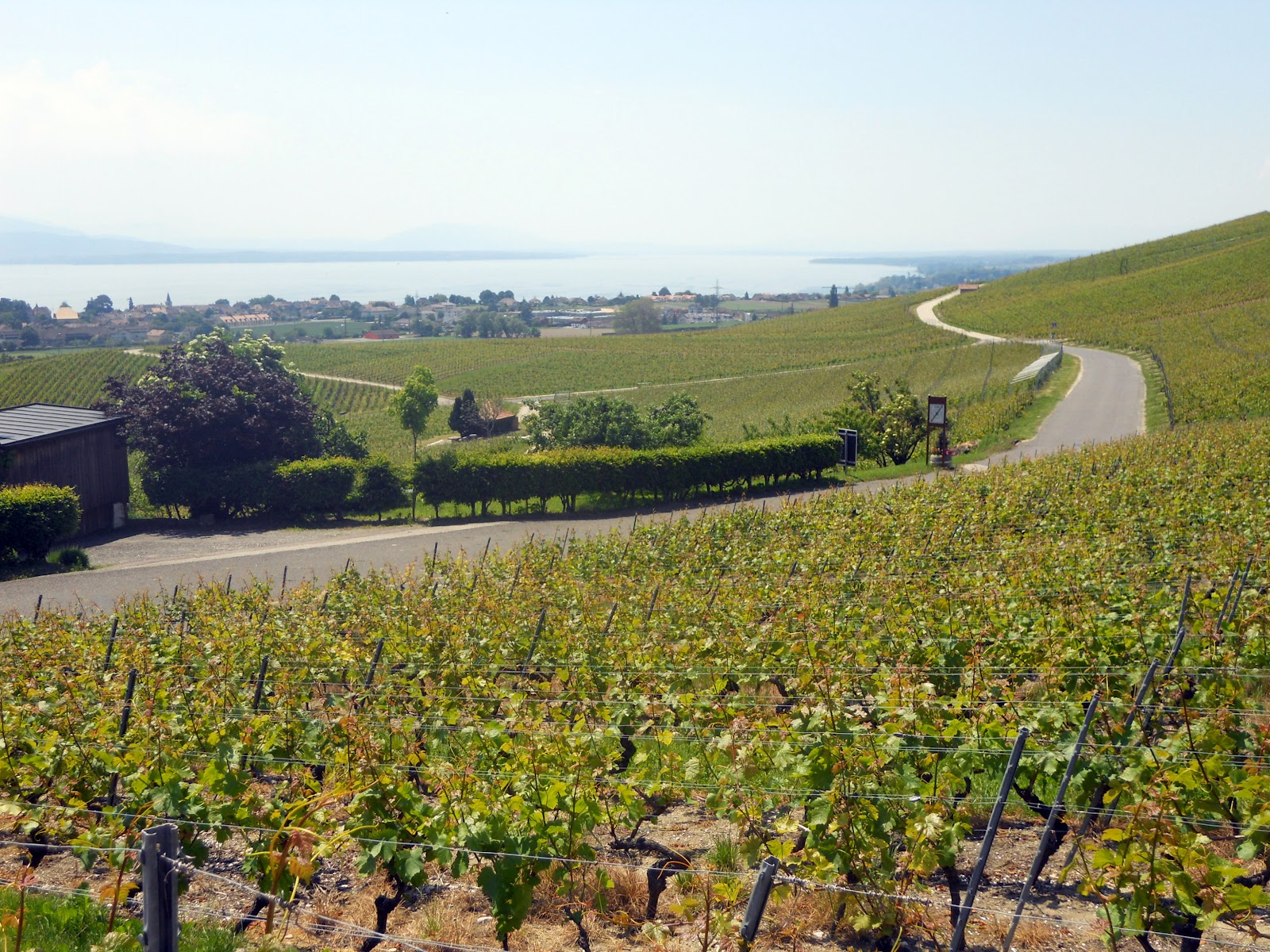
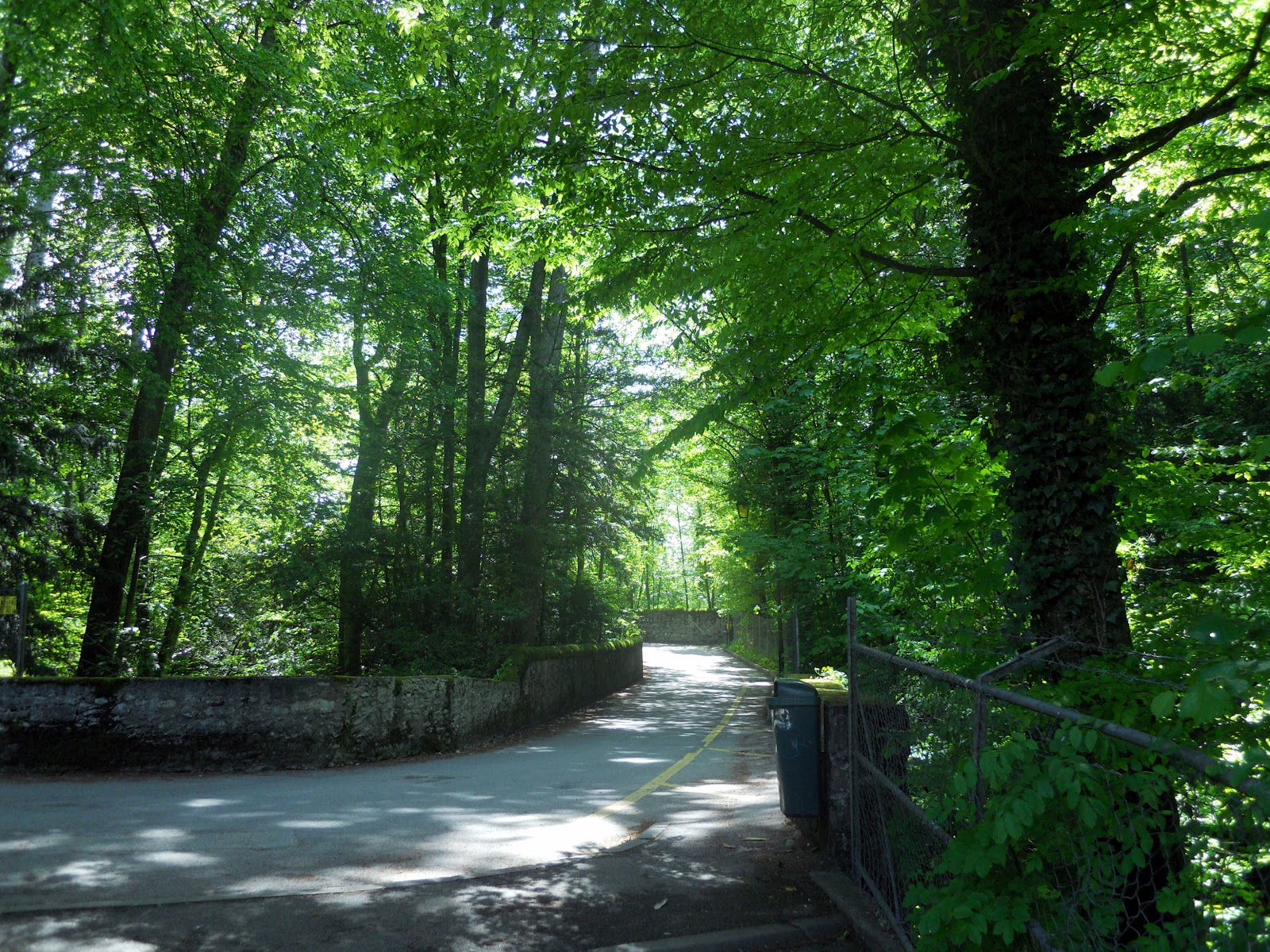
One of my favorite places to visit is the beautiful southern area of France known as Provence, with its blue sky, vivid bright colors, fragrant flowering plants, medieval villages perched on hillsides, olive groves, vineyards, Alpine foothills and, of course, the Mediterranean beaches near Cassis, Saint-Tropez, Cannes, Nice and further along the French Riviera into Italy. For a quick overview, see this short video.
The coast of Provence has some of the earliest known sites of human habitation in Europe. Primitive stone tools found there date back to 1.05 million years BC. This is patent evidence that even some of my earliest ancestors found the area conducive to settling down, finding food, building homes - although the earliest were cave dwellings - and raising families. Eons after these cave dwellers, the first pastoral peoples came, bringing flocks, agriculture and even industry. There is evidence that the first pottery production in France began in Provence, around 6000 BC. Various new peoples discovered the area, displacing or blending in with the earliest settlers until finally the two main groups were Celts and Ligurians. Then the Ancient Greeks discovered the area and created their first permanent settlement at Massilia (modern Marseille), making it one of the major trading ports of the ancient world.
But where the Greeks would settle, the Romans would not be far behind. Ultimately the Romans would conquer the whole of Gaul, later to become France. When I first studied Latin, I well remember working my way rather tediously through selected parts of the Commentarii de Bello Gallico written by Julius Caesar about his experiences in the Gallic War, as well as his frequent references to "Provincia" (now Provence). Since Caesar's days, many peoples have come and gone in the area: some willingly, some not. The last warlike invasions occurred there on 15 August 1944 when the Free French, accompanied by other Allied troops, had to reconquer their own country. Nowadays, invaders come from all over the world, armed principally with their pocketbooks and credit cards, to enjoy "la belle vie" as it is thoroughly enjoyed there.
The last time I visited Provence was in 2009 when Healer Sis was visiting. While we certainly enjoyed traveling and seeing the beautiful sights, upon our return to Switzerland we realized that we already had a lot of the ambiance of Provence right here, but without the crowds. Vineyards and mountains are here in abundance. I have a lovely little beachfront right on Lake Geneva. Best of all, it's only a five-minute walk from here. As for other typical sights of Provence, such as lavender
and brilliant scarlet poppies,
I can see them every day as I ride my bicycle.
In fact, all I have to do is look out on my balcony
and I have my transplanted Provence right before my eyes!
Sagittarius (22 November - 21 December) is a fire sign ruled by the planet Jupiter and represented by a Centaur wielding a bow and arrow. Sagittarians tend to have dreams that are very dear to their hearts and are the bases for their motivations. Their freedom to dream is essential to their well-being. Among many other things, they love children, animals and travel.
Showing posts with label Nature. Show all posts
26 June 2012
22 June 2012
Midsummer
I find that my spirits begin to lift around 20-23 December each year, dependent on when the winter solstice actually falls and the days begin to grow longer. Similarly, my spirits acknowledge the high point of the year with elation, that day when we have the most daylight hours. The summer solstice falls around 20-22 June. Inexorably, it occurred again this year, on 20 June. Now begins the shortening of the daylight hours, gently at first, then quickening after the autumn solstice until we rush headlong into days of darkness once again. My mood ever so gradually reflects this.
The waning of daylight affects our circadian rhythms, those fascinating processes intrinsic to us that are controlled by light and dark. They let us know when to sleep, when to wake, when to be active and when to rest. Light is literally a life-bringer; dark can be a life restorer. Light and Dark have their designated places in our life cycles. So long as each is kept in balance, they can help us to retain our own centers and our wholeness. Seriously imbalanced, they can cause physiological or psychological illness, even to trauma and paranoia. There is good reason why continuing periods of bright light are used by torturers, for example. We thought that such things were of the past, certainly not used by "civilized" societies.
We were wrong.
To our ancestors, whole rites and rituals developed around these special periods of the year. My own ancestors, Celts for the most part, used to celebrate by dancing around bonfires to help increase the Sun's energy. Druids (Celtic priests) used to celebrate the day as the "wedding of heaven and earth," giving rise to the tradition of June brides because June was considered to be a lucky month.
Of course, this is mostly latter-day reconstruction of events. When there were Druid priests, there was no June as we know it. Just how did those priests know when Midsummer occurred? Or Midwinter, for that matter? There were no calendars then, at least none that we have found. Did they base their calculations on the Sun, or the Moon? After all, the Lunar Year is significantly shorter than the Solar Year. Perhaps this moveable feast varied by significantly more than a few days each year, at least until the Julian calendar imposed dates and months.
For me, Midsummer is always a time for musing, for the beginnings of a sadness that once again, another year has climbed to its midpoint. Many I knew and loved who began 2012 as HWMBO and I did have not even lasted to this point. And we are ourselves growing grayer as we begin the descent.
The waning of daylight affects our circadian rhythms, those fascinating processes intrinsic to us that are controlled by light and dark. They let us know when to sleep, when to wake, when to be active and when to rest. Light is literally a life-bringer; dark can be a life restorer. Light and Dark have their designated places in our life cycles. So long as each is kept in balance, they can help us to retain our own centers and our wholeness. Seriously imbalanced, they can cause physiological or psychological illness, even to trauma and paranoia. There is good reason why continuing periods of bright light are used by torturers, for example. We thought that such things were of the past, certainly not used by "civilized" societies.
We were wrong.
To our ancestors, whole rites and rituals developed around these special periods of the year. My own ancestors, Celts for the most part, used to celebrate by dancing around bonfires to help increase the Sun's energy. Druids (Celtic priests) used to celebrate the day as the "wedding of heaven and earth," giving rise to the tradition of June brides because June was considered to be a lucky month.
Of course, this is mostly latter-day reconstruction of events. When there were Druid priests, there was no June as we know it. Just how did those priests know when Midsummer occurred? Or Midwinter, for that matter? There were no calendars then, at least none that we have found. Did they base their calculations on the Sun, or the Moon? After all, the Lunar Year is significantly shorter than the Solar Year. Perhaps this moveable feast varied by significantly more than a few days each year, at least until the Julian calendar imposed dates and months.
For me, Midsummer is always a time for musing, for the beginnings of a sadness that once again, another year has climbed to its midpoint. Many I knew and loved who began 2012 as HWMBO and I did have not even lasted to this point. And we are ourselves growing grayer as we begin the descent.
29 May 2012
The Remains of the Day
Amply fortified with more wine samples - one of which I'll likely return to buy - I headed out from Fechy-Dessus towards Bougy-Villars, noticing that the slope above me was also lined with houses overlooking vineyards.
Here's one last view of the Fechys - Upper and Lower! What pretty villages they are!
But there were still lots of vineyards to see and sip at. This particular domain was not one of them, but it was still a pretty sight.
Aha - a vineyard that ticks all the picturesque buttons, with its open courtyard framed by ivy-covered walls! And yes, this was my next stop!
The tasting was not held in the courtyard of this cave, which has been a family business passed from father to son since 1689 (!), but in a special tasting room on the ground floor of the house. The entrance is shown here.
I tried some of their "unique" pinot grigios and a magnificent assemblage blanc, characterized as a "vin innovatif." Their pinot noir was pretty good too. As with all the wineries I visited that day, the hospitality was exceptional. But this is certainly a winery that I will also return to and be proud to show off to visitors.
Unfortunately, however, time was passing and I had missed the shuttle at this stop
so I decided to continue on to Bougy-Villars, yet another pretty village.
Houses bedecked with vivid flowerpots
and ivy lined the way.
There are also guesthouses for those who would like to spend quality time among the vines.
Having had a very satisfactory day even though I had barely scratched the surface of the vineyards in the region, I headed back towards Allaman to catch my train home. Perhaps the wine had addled my brain enough that I had underestimated the distance I had come. Instead of waiting prudently for the next shuttle, I struck off on my own. Obviously, since I'm writing these posts, I returned home unscathed. But I was also exhausted.
I thought that the exhaustion was brought on by the wine I had drunk until I calculated how far I had walked: 18 kilometers (15 miles)! That may seem trifling to those who are not in their late 60s. But I had to admit that I impressed myself!
Here's one last view of the Fechys - Upper and Lower! What pretty villages they are!
But there were still lots of vineyards to see and sip at. This particular domain was not one of them, but it was still a pretty sight.
Aha - a vineyard that ticks all the picturesque buttons, with its open courtyard framed by ivy-covered walls! And yes, this was my next stop!
The tasting was not held in the courtyard of this cave, which has been a family business passed from father to son since 1689 (!), but in a special tasting room on the ground floor of the house. The entrance is shown here.
I tried some of their "unique" pinot grigios and a magnificent assemblage blanc, characterized as a "vin innovatif." Their pinot noir was pretty good too. As with all the wineries I visited that day, the hospitality was exceptional. But this is certainly a winery that I will also return to and be proud to show off to visitors.
Unfortunately, however, time was passing and I had missed the shuttle at this stop
so I decided to continue on to Bougy-Villars, yet another pretty village.
Houses bedecked with vivid flowerpots
and ivy lined the way.
There are also guesthouses for those who would like to spend quality time among the vines.
Having had a very satisfactory day even though I had barely scratched the surface of the vineyards in the region, I headed back towards Allaman to catch my train home. Perhaps the wine had addled my brain enough that I had underestimated the distance I had come. Instead of waiting prudently for the next shuttle, I struck off on my own. Obviously, since I'm writing these posts, I returned home unscathed. But I was also exhausted.
I thought that the exhaustion was brought on by the wine I had drunk until I calculated how far I had walked: 18 kilometers (15 miles)! That may seem trifling to those who are not in their late 60s. But I had to admit that I impressed myself!
28 May 2012
More Wine Tasting
On my way up the slope to Fechy-Dessus, I passed by this winery, but did not stop in. After all, it was early steps yet in my hike. Even though one is not expected to - and doesn't usually - drink all the wine one is given (there are little containers provided like the one shown here into which one can spit the remainder or simply empty the contents of one's glass), it's never a good idea to overindulge. Alcohol is dehydrating, after all, and the day was getting hotter.
I also noted this little house with a quaint - and distinctive - window placement.
Looking back towards Fechy, with Lake Geneva in the background, one can see that while the slope is gentle, it is indeed an incline. The Alps are mostly hazy, as is common in mid-Spring.
The vines are still in early growing stages and look spindly and sparse compared to the way they will look in a few more weeks. Most did not even put out leaves until the beginning of May. Here is the center of Fechy-Dessus, which is a beautiful little village. There is even a shuttle stop to the left, just in case I had changed my mind about hiking!
Here is also where I decided to experience my second tasting of the day. One can taste as many wines as one wishes at each stop, so full disclosure requires that it wouldn't just be my second wine!
This beautiful location had the most splendid viewing terrace, with a panoramic view of the region. Best of all, I was their first visitor of the day, so they had plenty of time to chat.
Remember the winery I passed on the way up the slope. Here's another view from the terrace.
As you can see from the photo above, just below the viewing terrace, this enterprising family also had a terraced vegetable garden, still in early growing stages. Here's another view.
Saying adieu to Fechy-Dessus,
I began hiking towards Bougy-Villars, generally in the direction towards Geneva.
What a magnificent vista!
I also noted this little house with a quaint - and distinctive - window placement.
Looking back towards Fechy, with Lake Geneva in the background, one can see that while the slope is gentle, it is indeed an incline. The Alps are mostly hazy, as is common in mid-Spring.
The vines are still in early growing stages and look spindly and sparse compared to the way they will look in a few more weeks. Most did not even put out leaves until the beginning of May. Here is the center of Fechy-Dessus, which is a beautiful little village. There is even a shuttle stop to the left, just in case I had changed my mind about hiking!
Here is also where I decided to experience my second tasting of the day. One can taste as many wines as one wishes at each stop, so full disclosure requires that it wouldn't just be my second wine!
This beautiful location had the most splendid viewing terrace, with a panoramic view of the region. Best of all, I was their first visitor of the day, so they had plenty of time to chat.
Remember the winery I passed on the way up the slope. Here's another view from the terrace.
As you can see from the photo above, just below the viewing terrace, this enterprising family also had a terraced vegetable garden, still in early growing stages. Here's another view.
Saying adieu to Fechy-Dessus,
I began hiking towards Bougy-Villars, generally in the direction towards Geneva.
What a magnificent vista!
27 May 2012
Caves Ouvertes Vaudoises
The annual Caves Ouvertes Vaudoises was held this past weekend. This is a time when the local vintners hold open houses in their wine cellars and invite the population in to sample their wares and - hopefully - buy some. Swiss wines may not be well-known to the world outside this country, largely because they are rarely, if ever, exported. This situation is much to our liking. The wines are excellent and affordable, in some cases, they are almost cheaper than the bottled water that is also popular here. When the weather is glorious, as it was this weekend, it also provides an opportunity to get some fresh air and exercise. Most caves are so concentrated within the wine-growing regions of the canton of Vaud that they are within ideal walking distance of one another.
On Saturday, I decided to visit a region that I had not previously visited. I should explain that locally, several caves can already be found in the village next to mine, among them the winemakers who process the grapes in "my" vineyard, i.e., the vines that are located in front of our apartment complex. But because I regularly cycle through that area and have written about events there before, I wanted to see something different. So I decided to take the train to Allaman and from there take the free shuttles (navettes) up to the villages of Fechy, Fechy-Dessus and Bougy-Villars to wander through the vineyards there and sample the wines. My plan was to follow the shuttle route so that I could take the shuttle back to the train station.
The plan began well enough. I blithely hopped off at the first stop in Fechy after taking a couple photos from inside the bus.
Then I visited my first cave of the day.
Each participating cave was distinguished by a black and red banner.
One could pay CHF 15 at any participating cave in order to receive a commemorative wine glass and a carrying pouch that one could place around one's neck. The pouch and glass would allow entry and tasting privileges at any of the participating caves. Here is my sampling equipment, with the glass already containing a taste of the vintner's pinot noir. Believe me, that sample didn't last long.
After spending some pleasant moments chatting, learning about the wines of that cave and really impressing a Swiss woman because I planned to hike around the area rather than drive, I left to climb the hill up to Fechy-Dessus (literally Upper Fechy).
Pay special attention to the building with the terrace in the center-left of this photo. There will be more about that in the next post.
On Saturday, I decided to visit a region that I had not previously visited. I should explain that locally, several caves can already be found in the village next to mine, among them the winemakers who process the grapes in "my" vineyard, i.e., the vines that are located in front of our apartment complex. But because I regularly cycle through that area and have written about events there before, I wanted to see something different. So I decided to take the train to Allaman and from there take the free shuttles (navettes) up to the villages of Fechy, Fechy-Dessus and Bougy-Villars to wander through the vineyards there and sample the wines. My plan was to follow the shuttle route so that I could take the shuttle back to the train station.
Then I visited my first cave of the day.
Each participating cave was distinguished by a black and red banner.
One could pay CHF 15 at any participating cave in order to receive a commemorative wine glass and a carrying pouch that one could place around one's neck. The pouch and glass would allow entry and tasting privileges at any of the participating caves. Here is my sampling equipment, with the glass already containing a taste of the vintner's pinot noir. Believe me, that sample didn't last long.
After spending some pleasant moments chatting, learning about the wines of that cave and really impressing a Swiss woman because I planned to hike around the area rather than drive, I left to climb the hill up to Fechy-Dessus (literally Upper Fechy).
Pay special attention to the building with the terrace in the center-left of this photo. There will be more about that in the next post.
13 May 2012
May Flowers
Friday and this weekend marked the annual three-day Flower Market in my village, which is always a colorful way to spend some time, especially if the sun is shining. And shine it did, on Friday, with the day's temperatures reaching record levels for this time of year! So I made my way into town via the shady trail rather than along the very sunny lake road.
As usual, our local château was the site of the expositions
with a detailed plan of which exhibits and exhibitors could be found where.
Even château outbuildings, such as the former stables to the rear of this photo, were utilized
with an eclectic grouping of objets to tempt entry.
The former caves (wine cellars) displayed various floral displays and bouquets,
as well as table settings, displaying caterer's wares.
But the main attractions were to be found in the jardins, which were the formal entry point.
More in the next post ...
22 April 2012
Mother Nature and Equipoise
Both yesterday and today, I ventured out on my bicycle even though the forecast was for more April showers. Here, for example, is one of the views that greeted me today.
While I did have some scattered raindrops and faced a strong headwind on my return home, I was glad that I had made the effort. The gathering clouds presented some spectacular contrasts.
But most of all, I was enchanted when a red squirrel darted across my path. In this post from 2010, I wrote about experiencing a similar event. This time, however, instead of vanishing into the foliage along the path, the little creature scampered up the trunk of a nearby birch tree. I dismounted and pulled out my camera, hoping to get a shot, but the little squirrel was simply too shy. I could get occasional glimpses of its tufted ears and its russet tail, but it remained obstinately out of sight - certainly out of view of my little camera's capacities. So, I moved on, once more delighted at this rare sighting.
So this makes two sightings in little more than two years of the elusive and increasingly rare little creature. Because this location was quite a distance from my previous sighting, I dare to hope that it was an additional and not simply the same squirrel. Perhaps they are making a comeback. One can hope.
Other wildlife species considered vanished from this area also seem to be making a comeback, although not everyone is delighted by that. Thus, the Geneva Tribune reported this week that cameras positioned at various points on the Saleve, the mountain located in France that looms over Geneva and that features in Mary Shelley's novel Frankenstein, captured photos of a wolf several times at the end of March.
Those familiar with the origin of the novel may remember that Ms Shelley, at the time Mary Wollstonecraft Godwin, was spending the summer with her future husband, the poet Percy Bysshe Shelley, and other literary friends at a villa on Lake Geneva rented by Lord Byron. The weather being rainy and cold, not conducive to wandering about the countryside or other activities, the group decided to amuse themselves by having a competition to determine who could write the best horror story. Thus, this world-famous novel was born.
The cameras were placed on the Saleve in the hopes of capturing photos of a lynx. While the lynx has still proven elusive, scientist were surprised to see that there is at least one wolf there. Neighboring livestock owners are not at all excited by this, much like similar controversies surrounding the return of the wolf that continue in my own native Montana.
But I live in hope that we can all manage to find some way to coexist. Mother Nature apparently believes that we can.
While I did have some scattered raindrops and faced a strong headwind on my return home, I was glad that I had made the effort. The gathering clouds presented some spectacular contrasts.
But most of all, I was enchanted when a red squirrel darted across my path. In this post from 2010, I wrote about experiencing a similar event. This time, however, instead of vanishing into the foliage along the path, the little creature scampered up the trunk of a nearby birch tree. I dismounted and pulled out my camera, hoping to get a shot, but the little squirrel was simply too shy. I could get occasional glimpses of its tufted ears and its russet tail, but it remained obstinately out of sight - certainly out of view of my little camera's capacities. So, I moved on, once more delighted at this rare sighting.
So this makes two sightings in little more than two years of the elusive and increasingly rare little creature. Because this location was quite a distance from my previous sighting, I dare to hope that it was an additional and not simply the same squirrel. Perhaps they are making a comeback. One can hope.
Other wildlife species considered vanished from this area also seem to be making a comeback, although not everyone is delighted by that. Thus, the Geneva Tribune reported this week that cameras positioned at various points on the Saleve, the mountain located in France that looms over Geneva and that features in Mary Shelley's novel Frankenstein, captured photos of a wolf several times at the end of March.
Those familiar with the origin of the novel may remember that Ms Shelley, at the time Mary Wollstonecraft Godwin, was spending the summer with her future husband, the poet Percy Bysshe Shelley, and other literary friends at a villa on Lake Geneva rented by Lord Byron. The weather being rainy and cold, not conducive to wandering about the countryside or other activities, the group decided to amuse themselves by having a competition to determine who could write the best horror story. Thus, this world-famous novel was born.
The cameras were placed on the Saleve in the hopes of capturing photos of a lynx. While the lynx has still proven elusive, scientist were surprised to see that there is at least one wolf there. Neighboring livestock owners are not at all excited by this, much like similar controversies surrounding the return of the wolf that continue in my own native Montana.
But I live in hope that we can all manage to find some way to coexist. Mother Nature apparently believes that we can.
16 April 2012
Rover to the Rescue
In the past couple years, it appears that more and more individuals around the world have found that they are involuntarily sharing space with some very unwelcome critters: bed bugs! According to the on-line Wiki article, bed bugs were nearly eradicated in the developed world in the early 1940s. Since the mid-90s, however, they have made a sensational - if uncomfortable for us all - comeback. As recently as March 2012, ABC News reported that pest control companies in the US have reported a 33.6 per cent increase in treatments to kill the pesky and unwanted little visitors. Cincinnati, Chicago, Detroit, Denver and Los Angeles rank among the Top Five US cities for the number of bed bug treatments performed between January and December 2011.
In 2010, the National Pest Management Association (NPMA) released its first-ever comprehensive global bed bug study to determine the extent of beg bug resurgence. The study concluded that the world is "on the threshold of a bed bug pandemic." So, along with all the world's other problems, we now have to confront a pandemic from pests that were nearly eradicated in the first half of the last century. This is definitely two steps backward. At least.
Bed bugs are infecting homes, apartments, retail stores, offices, places of worship, college dorms, hospitals, day cares, modes of transportation, movie theaters - basically all places where human beings live and gather. They are the size and color of an apple seed, like to travel and will hide in suitcases, boxes and shoes. Besides mattresses and headboards, which used to be their usual haunts, they can now be found behind electrical switch plates, baseboards, picture frames, wall paper, upholstery and in furniture crevices. They are more difficult to treat for than cockroaches, ants and termites.
But "Man's Best Friend" offers hope. In response to a pest control market gap, the Florida Canine Academy trains "BedBugDogs" to detect bed bugs. The academy certifies the dogs and sells them. In fact, two are present and working for Scandog, a local Geneva business, which bills itself as the first Swiss company specializing in the detection of bed bugs.
Local businessman Didier Frey and his two certified BedBugDogs, Lucky, a Jack Russell terrier and Mailo, a golden lab, provide this service. Lucky specializes in smaller spaces while Mailo patrols larger ones. They were featured in Saturday's Geneva Tribune and have also received recognition in "News on Dogs."
While I hope that I will never need their services, it's good to know that they're around!
In 2010, the National Pest Management Association (NPMA) released its first-ever comprehensive global bed bug study to determine the extent of beg bug resurgence. The study concluded that the world is "on the threshold of a bed bug pandemic." So, along with all the world's other problems, we now have to confront a pandemic from pests that were nearly eradicated in the first half of the last century. This is definitely two steps backward. At least.
Bed bugs are infecting homes, apartments, retail stores, offices, places of worship, college dorms, hospitals, day cares, modes of transportation, movie theaters - basically all places where human beings live and gather. They are the size and color of an apple seed, like to travel and will hide in suitcases, boxes and shoes. Besides mattresses and headboards, which used to be their usual haunts, they can now be found behind electrical switch plates, baseboards, picture frames, wall paper, upholstery and in furniture crevices. They are more difficult to treat for than cockroaches, ants and termites.
But "Man's Best Friend" offers hope. In response to a pest control market gap, the Florida Canine Academy trains "BedBugDogs" to detect bed bugs. The academy certifies the dogs and sells them. In fact, two are present and working for Scandog, a local Geneva business, which bills itself as the first Swiss company specializing in the detection of bed bugs.
Local businessman Didier Frey and his two certified BedBugDogs, Lucky, a Jack Russell terrier and Mailo, a golden lab, provide this service. Lucky specializes in smaller spaces while Mailo patrols larger ones. They were featured in Saturday's Geneva Tribune and have also received recognition in "News on Dogs."
While I hope that I will never need their services, it's good to know that they're around!
05 April 2012
Spring Awakenings
Ever since the Spring solstice, each day has brought changes. I am enjoying what will be my last few days of lake visibility until late Fall, as from this view last week, where I even had a faint glimpse of the Alps across the lake in Haute-Savoie above "my" so-far bare-looking vineyard.
Late yesterday afternoon, no mountains were visible through the clouds that have been bringing a few drops of very welcome rain. A flowering tree is proudly displaying its spring colors that will later turn green.
But the lake is still visible.
Bright forsythia splashes the horizon.
The gnarled tree between here and the school is also leafing out nicely.
In the last rays of yesterday's setting sun, the leaves on the trees in this copse look more golden than green, reminiscent of the Fall.
But the longer periods of daylight, warmer weather and burgeoning shoots all round reassure us that Spring is indeed here.
Late yesterday afternoon, no mountains were visible through the clouds that have been bringing a few drops of very welcome rain. A flowering tree is proudly displaying its spring colors that will later turn green.
But the lake is still visible.
Bright forsythia splashes the horizon.
The gnarled tree between here and the school is also leafing out nicely.
In the last rays of yesterday's setting sun, the leaves on the trees in this copse look more golden than green, reminiscent of the Fall.
But the longer periods of daylight, warmer weather and burgeoning shoots all round reassure us that Spring is indeed here.
Subscribe to:
Posts (Atom)